
Navigating the Complexities of Relocating Plumbing During a Bathroom Remodel
When you envision a completely transformed master suite or guest bath, you are likely picturing an entirely new layout. Perhaps you want to move the shower to the opposite wall to capture more natural light, or maybe the current toilet placement disrupts the flow of the room. While changing a bathroom layout by moving plumbing lines is one of the most impactful ways to improve your home's functionality, it is also one of the most technically complex phases of any renovation.
For homeowners here in Spokane, planning a major update requires understanding what happens behind the drywall and beneath the floors. Moving water supply lines and drain pipes isn't just about connecting A to B; it involves structural considerations, strict building codes, and careful planning to avoid budget overruns. Whether you are planning a standalone bathroom update or a comprehensive interior remodeling project, understanding the process of relocating plumbing will help you make informed decisions and set realistic expectations for your home.
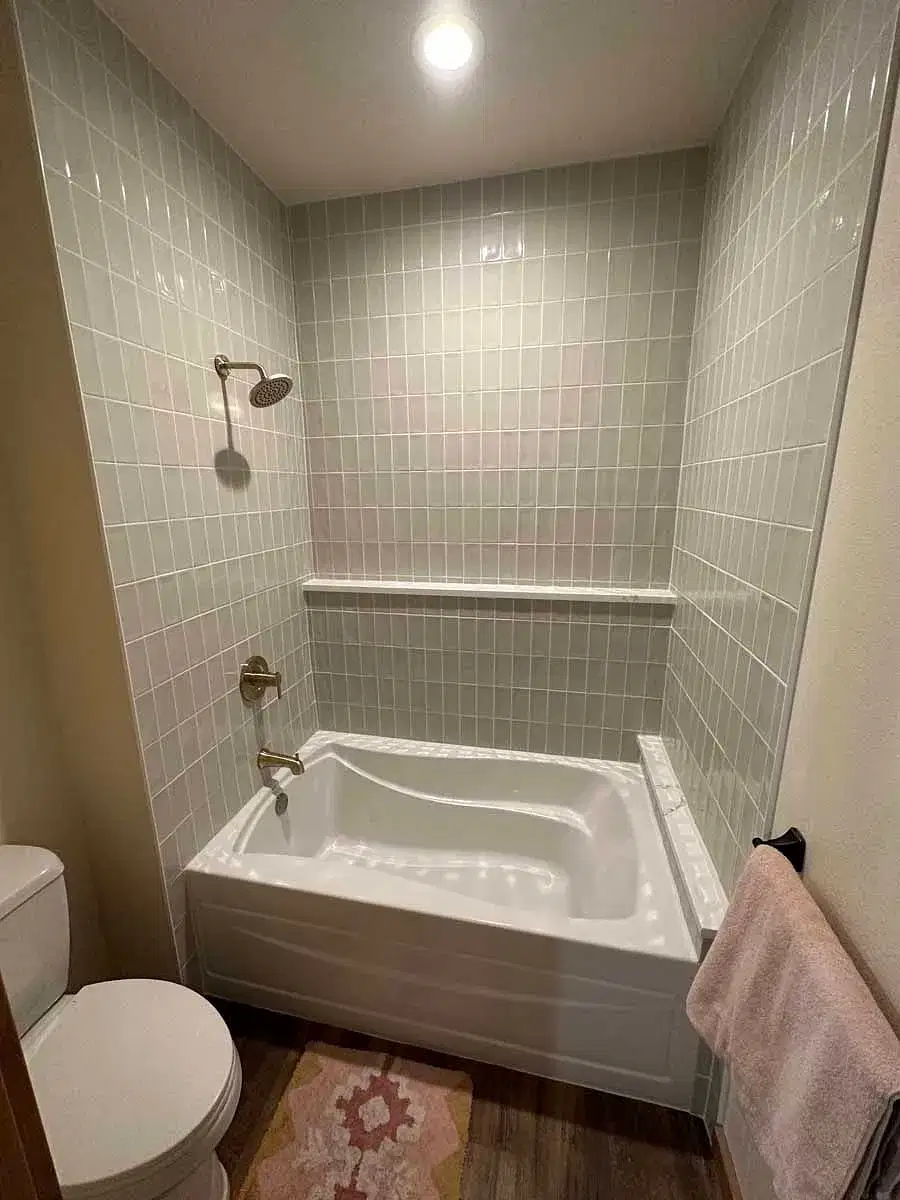
The Realities of Changing a Bathroom Layout
Relocating plumbing fixtures requires moving two distinct systems: the water supply lines (the pipes bringing hot and cold water in) and the drain, waste, and vent lines (the pipes carrying water and gases out). While extending a copper or PEX supply line a few feet is relatively straightforward, relocating toilet and shower drain lines is an entirely different undertaking.
Drains rely on gravity to move wastewater, meaning they must be installed with a specific downward slope. When you move a fixture across the room, the new drain line must have enough vertical space within the floor joists to maintain that slope before tying into the home's main soil stack.
The overall cost to move plumbing fixtures in a bathroom is heavily influenced by your home's foundation type. Moving plumbing in a bathroom remodel on a slab versus a crawlspace presents two very different scenarios. If your home has a crawlspace or an unfinished basement beneath the bathroom, our crews can easily access the floor joists from below to run new pipes. This significantly reduces labor time and material costs.
However, if your bathroom sits directly on a concrete slab, moving a toilet or shower drain requires breaking up the concrete, trenching the foundation to lay the new pipes, and pouring new concrete to seal the trench. This process is highly labor-intensive and will increase both the project timeline and the budget. When we discuss your bathroom remodel, identifying your foundation type is one of the very first steps we take to ensure our project estimating is as accurate as possible.
Navigating Permits, Compliance, and Estimating
A frequent question we hear from homeowners is whether they need to pull permits for their home renovation, or if the general contractor handles it. When it comes to moving plumbing, electrical, or altering load-bearing structures, permits are absolutely mandatory to ensure the work meets local building and safety codes. As your contractor, we handle all permitting and municipal inspections on your behalf. This protects you from costly fines and ensures that your home's updated systems are safe, compliant, and correctly documented for future resale.
Inaccurate project estimating is a common frustration in the construction industry, particularly when hidden plumbing issues are uncovered once the walls are opened. Fluctuating material costs can also strain budgets during long projects. To combat this, we prioritize extreme transparency during the pre-construction phase. We provide detailed written contracts that explicitly outline the scope of work, the materials to be used, and a clear standard payment schedule tied to tangible project milestones rather than arbitrary dates.
By taking the time to thoroughly investigate your existing plumbing layout before the demolition phase begins, we can mitigate surprises and keep your project on track, even amidst broader supply chain disruptions that occasionally affect the availability of specific fixtures or piping materials.
The Role of Modern Technology in Your Remodel
The construction industry is rapidly evolving, and integrating technology is essential for delivering a seamless client experience. When dealing with the spatial challenges of relocating plumbing, we utilize modern 3D visualization tools. This allows you to see exactly how your new bathroom layout will function before a single hammer is swung.
Seeing a 3D model of your relocated shower, vanity, and toilet helps clarify spatial relationships that 2D blueprints simply cannot convey. Furthermore, utilizing digital project management tools ensures that you are never left in the dark about your renovation's progress. We believe that clear, consistent communication is the antidote to project anxiety, providing you with real-time updates on material deliveries, inspection schedules, and daily crew progress.
Selecting the Right Partner for the Job
When undertaking a project as critical as moving the plumbing in your home, it is vital to work with a qualified professional. But how do you verify a general contractor's license and insurance, and what is the difference between a general contractor and a subcontractor?
A general contractor manages the entirety of your remodeling project, from initial design and permitting to final finishing. We act as your single point of contact and assume responsibility for the site's safety, timeline, and quality control. Subcontractors are specialized tradespeople—such as dedicated plumbers or electricians—hired by the general contractor to perform specific tasks.
To verify credentials, you can easily look up a contractor's licensing and bonding information through the state's Department of Labor & Industries portal. A trustworthy contractor will also readily provide their certificate of insurance upon request.
When evaluating a partner for your remodel, look for a detailed portfolio of past projects, a history of positive customer reviews, and a willingness to answer your questions clearly. A professional contractor will never pressure you into an ambiguous agreement. Your contract should always include a detailed breakdown of costs, a defined timeline, a clear dispute resolution process, and an outlined warranty for the workmanship.

Bringing Your Vision to Life
Relocating plumbing fixtures is a significant undertaking, but it is often the key to unlocking the true potential of a cramped or outdated bathroom. By understanding the structural requirements, ensuring proper permitting, and utilizing modern design technology, you can navigate this complex process with confidence.
At Brother's Keeper Construction, we take pride in delivering transparent pricing, exceptional craftsmanship, and reliable communication from the initial consultation to the final walkthrough. If you are ready to explore the possibilities of your home here in Eastern Washington, we invite you to contact us today. Let's discuss how we can expertly manage your layout changes and build a beautiful, functional space that serves your family for years to come.